
Long Segment
I watch two pictures. I continue reading old newspaper comics and epic poetry. I read and re-read the same three children's books for a month.

Film Selections: Two Recent Pictures and No More
If I Had Legs I’d Kick You, directed by Mary Bronstein, 2025. Engrossing melodrama about a woman straining to juggle challenges including her child’s illness, home displacement, professional ennui and over-dependence on alcohol and drugs. Anchored by a stellar performance by Rose Byrne in the role of the protagonist Linda.
I had been looking forward to this for a long time because, like writer and director Mary Bronstein, I’ve been a devoted fan of Conan O’Brien’s work since adolescence, and he’s been mentioning on his podcast for a while that he submitted his first-ever serious film role in this picture. It turns out that he plays Byrne’s character’s therapist, but that she herself also works as a therapist in the same office complex, a dramatic construction which entangles these two individuals as colleagues, rivals and therapist/client. With no formal acting background, O’Brien was functionally cast as a no-nonsense and physically imposing authority figure in the protagonist’s overwhelming life, producing complicated feelings of resentment, affection and attraction.
The plot surges into motion when Linda and her daughter are displaced from their home by a gaping water-damage hole that erupts in their ceiling. Holes become a leitmotif, with Linda eventually staring into its blackness and hallucinating an association with the hole in her daughter’s body through which a tube has been inserted as treatment for some chronic medical problem. Linda’s husband, played by Christian Slater, is out of town working, so he functions mostly as a disembodied phone voice berating Linda for failing as a parenting partner. Bronstein also chooses to shoot almost the entire film without showing the daughter’s face, even though she is usually at Linda’s side asking her for things like a pet hamster. (This creature meets a gruesome fate in one of the elaborate set pieces of panicky, tragicomic slapstick business that punctuate the picture at intervals.)
A$AP Rocky instantiates another outré but insightful casting choice in his role as a fellow resident of the hotel where Linda and daughter hole up while Linda flails emotionally. Young, handsome, charismatic and from an interestingly different culture, Linda develops a crush on him that perhaps mirrors and inverts her feelings for O’Brien’s character, her yearning for the two very different men yanking her in opposite directions. Her therapist/colleague is like an implacable mountain, immovable and unbothered by her put-downs and exhortations, willing to simply and quietly be there for her so that she can eventually have an emotional breakthrough (which becomes a key sequence in the film, as we learn part of Linda’s personal history which explains the deeper meanings of some of her emotional problems). A$AP Rocky’s character offers himself as a flirt and friendly co-conspirator, reminding Linda of the fun of her life before she had grownup responsibilities. When Linda’s husband does finally show up, he is clad in a handsome professional uniform and moves with a commanding sense of confidence and manliness, the suggestion seeming to be that he would represent a great catch if not for that he is away working too much and constantly chastises and shames Linda for not being good enough as a mother.
But at times Linda may well not be enough, as she herself constantly frets throughout the film. She’s a complicated, relatable, deeply flawed and painfully human character for whom Bronstein’s writing and Byrne’s acting invite empathy, indictment, consternation and affection. While promoting the film on Conan’s podcast, Bronstein mentioned that “there’s some people in life that you don’t like. And there’s some people that in a movie that you don’t like, and we can’t be scared of that.” She speaks of wanting to depict more “female characters that are full human beings” and of whom it could be said that we “might love them, or we might not like them, or we might see ourselves in them, or we might say...they might scare us. None of that’s bad. It’s all great. Because the thing about movies is that you are in a theater; you are asked to get into somebody else’s point of view. Into somebody else’s life.”
Towards this end and in counterpoise to Conan and A$AP Rocky’s characters, Bronstein also situates Linda alongside two female characters who seem to implicitly invite, dare and/or bully our protagonist to be more like them. One is a somewhat controlling and self-satisfied physician played by Bronstein herself; the other is a client of Linda’s played by Danielle Macdonald, a fragile new mother who is even closer to the brink of losing her shit than Linda. Bronstein films all of Linda’s interactions with the various characters in her life, even the disembodied voices of her daughter and husband, with a claustrophobic and manic intimacy that at once reflects Linda’s scattered emotional condition while also implicating the viewer in scrutinizing her. It feels like we are getting into her space and seeing aspects of her life we’re not supposed to see, that we may acknowledge or dislike in ourselves. Which I suppose makes this a kind of emotional horror picture.
I really dug this movie overall, and I’m so thankful that Conan accepted the challenge of participating in this kind of project. I had never heard of Bronstein before Conan started talking about being in this movie, and in addition to being a thoughtful and talented filmmaker, she was also an incredibly charming and vivacious presence on the podcast. I’m mostly quitting watching any new movies because the juice isn’t worth the squeeze these days with how much the feature film medium seems to be deteriorating, both in form and quality. But whatever Bronstein does next will most likely be one of the new films of the next few years for which I’ll make an exception.
Sinners, directed by Ryan Coogler, 2025. A respectable failure and fascinatingly flawed movie. Distinguished by the originality of Coogler’s premise, dazzling photography by Autumn Durald Arkapaw, a fine score by Ludwig Göransson and bravura acting by Michael B. Jordan, Hailee Steinfeld, Miles Caton, Delroy Lindo and others.
Coogler deserves immense praise for even attempting to make a movie based around the concept of blues music as the progenitor of almost all popular music of the last hundred years. Much of the point is in the title and gets written directly into the premise and dialogue: black people forced into slavery brought West African rhythms with them to America and invented the blues in contrast to gospel music, in other words as a way of expressing and engaging with the complexity and challenges of real life outside of the demands of the church. Sinners’ music is much more fun and interesting than gospel music because a life of sin is sexier, flashier and more dramatic, so Coogler follows the logical step and constructs an entire movie based around this area of thought and culture. Caton plays a brilliant young Delta blues musician in 1932 whose preacher father wants him not to play blues, while his older twin gangster cousins (both played by Jordan, his usual brilliant self in both roles) want him to perform at a juke joint they are opening.
Cool premise, but structural problems abound in Coogler’s screenplay. The brothers are implausibly setting up their entire enterprise in one day, rushing the action in an already overstuffed caper which also incorporates a supernatural component and finally becomes a full-fledged vampire movie. Coogler uses the vampires as an interesting metaphor for white supremacy and racism, and specifically for American society wanting to steal the blues to integrate it into the broader culture because it is too valuable not to exploit. The movie makes some really interesting comments on all this while also exploring some mild hostility towards white American country music of the type partially derived from traditional forms of Scots-Irish music (this early country music being a form I personally like almost as much as Delta blues).
But in this particular picture the vampire thing is forced to jostle for screen time with the racial and social politics, crime movie tropes, a sprawling cast, several stories of love and lust, time-jumps, marvelous musical numbers, an abrupt and jarring shift to a climactic action movie shootout and a coda that scrambles to tie it all together. This movie has about five different grandiose and ambitious ideas, any one of which could have been interesting on its own and any three of which a filmmaker of Coogler’s talent and experience probably could have interwoven into a masterpiece. For me as a fan of this kind of music and someone interested in where it comes from and what it means, Sinners tackles ideas that have fascinated me for decades and approaches them with commendable enthusiasm and originality. But it lacks cohesion and confounds suspension of disbelief. I would recommend watching this movie and just expecting to be disappointed, so that you can enjoy it as merely the sum of its parts. Most of those individual parts are exquisite.
Blondier and Blondier
Reading Blondie comics from 1934 by the strip’s original creator Chic Young is still going fine. It’s not the greatest pre-War strip I’ve ever studied; it’s hard to compare Dagwood’s whinging about Blondie’s spousal demands or scrambling to catch his bus with the exploding psychedelic landscapes of Herriman’s Krazy Kat or the swashbuckling fisticuffs of Castor and Popeye and Segar’s Thimble Theatre. But I’m having a pretty good time, and most importantly getting my daily fix of at least two full pages of classic newspaper comics.
I’m into October 1934, past the point at which Dagwood and Blondie have become parents, in what scholar Brian Walker in his introduction calls “the immaculate conception” of their first child on April 15, 1934:
Two weeks before the delivery, Blondie, who had shown no previous signs of pregnancy, mysteriously went missing. Dagwood was obviously keeping a secret from the neighbors who wondered where his wife had gone. When the expected phone call finally came, Dagwood raced to the hospital with an armful of gifts. The newborn made his homecoming on April 27 and life in the Bumstead household changed dramatically.
This family-style Blondie is closer to the version of the Blondie strip I remember reading in the newspaper in my youth.
Literary Update
I’m on Book 15 of The Iliad. So I’m more than halfway through the book. It’s interesting, and it’s dense, and it’s slow in the going. The blood and gore are usually the best parts, with spears going through necks and eyes and whatnot.
In Book 12 the Trojans make headway moving down from Troy across the plain and pushing up against the mighty defensive wall that the Greeks have erected around their siegin’ ships. The hand-to-hand fighting at the wall becomes bitter, vicious, intimate and gnarly. One of the two Greek warriors named Ajax hurls a huge rock at the head of a Trojan named Epicles, whose skull is “completely shattered” so that he “tumbled down from the high wall, like an acrobat. Life left his bones.” Numerous others kill and die; a few flee. One of the casualties is someone named Alcmaon, “son of Thestor,” who gets speared by Sarpedon and then falls “face downward following the weapon’s thrust. The fine bronze armor clattered round the corpse.” Soon after that the narrator tells us the “whole long segment fell, and the wall was bare of its defenses, creating room for many men to cross.”
Aside from Tolkien, whom I think would have been well acquainted with Homer and may have read The Iliad in the original Greek, this particular passage reminded me of how the legendary historian James M. McPherson described part of the Battle of Spotsylvania Court House in his magisterial history of the American Civil War (and one of my favorite books ever) Battle Cry of Freedom: The Civil War Era.
The Bloody Angle of Spotsylvania Court House, and McPherson’s account of it, have always been one of the most troubling, thrilling and captivating parts of Civil War history to me. As McPherson writes:
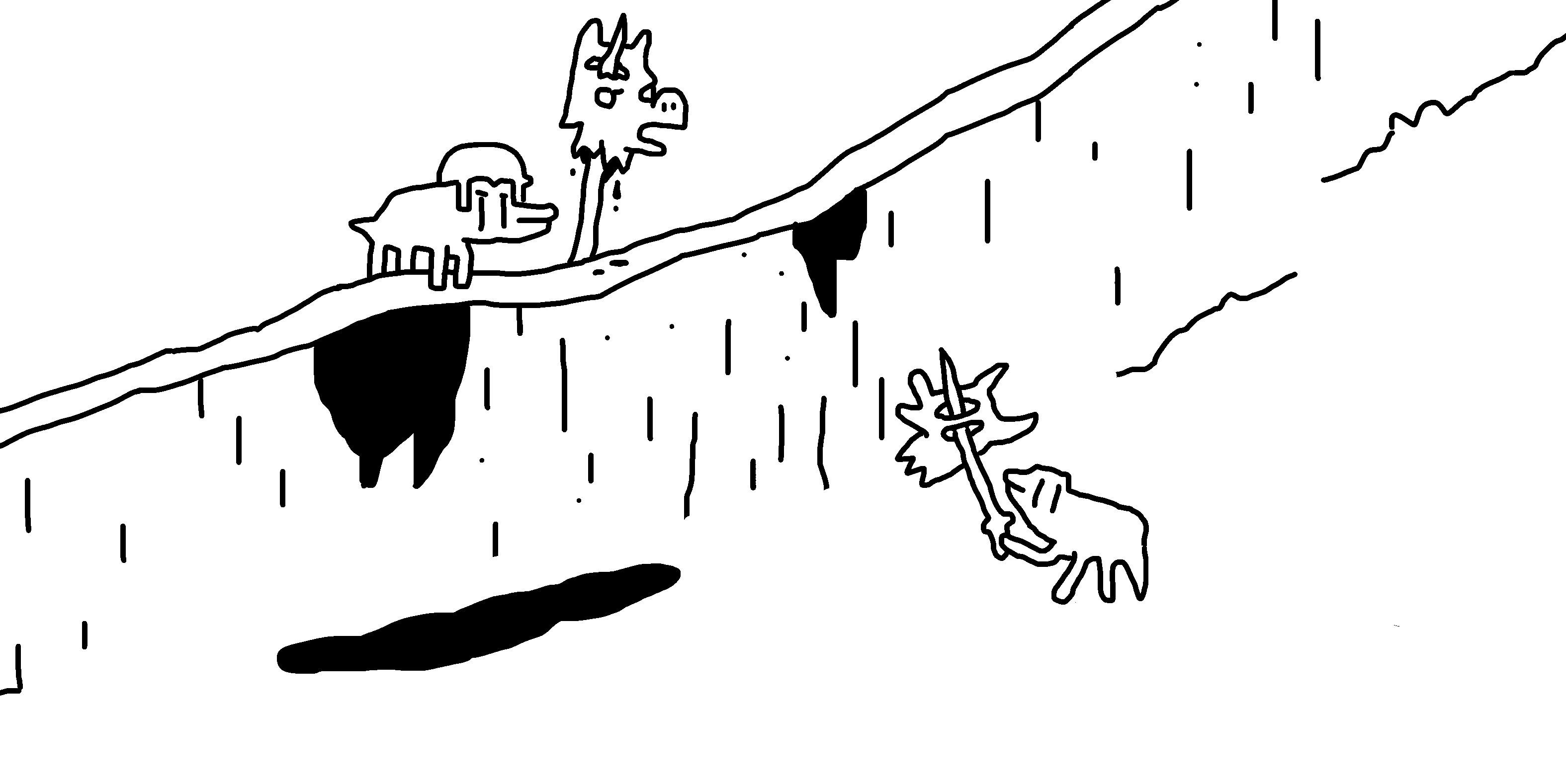
For eighteen hours in the rain, from early morning to midnight, some of the war’s most horrific fighting raged along a few hundred yards of rebel trenches. “The flags of both armies waved at the same moment over the same breastworks,” recalled a 6th Corps veteran, “while beneath them Federal and Confederate endeavored to drive home the bayonet through the interstices of the logs.” Impelled by a sort of frenzy, soldiers on both sides leaped on the parapet and fired down at enemy troops with bayoneted rifles handed up from comrades, hurling each empty gun like a spear before firing the next one until shot down or bayoneted themselves.
In the next paragraph McPherson writes:
Hand-to-hand fighting like this usually ended quickly when one side broke and ran; but today neither line broke and few men ran. It became an atavistic territorial battle. Blood flowed as copiously as the rain, turning trench floors into a slimy ooze where dead and wounded were trampled down by men fighting for their lives.
There were plenty of nerds fighting and dying in the Civil War, and it was the nineteenth century, so a number of them would have been classicists. It’s not inconceivable that one of those men fighting and dying atop the breastworks or underfoot in the trenches at the Bloody Angle may even have had a copy of The Iliad on him when he died.
On a lighter note, I spent February running an experiment whereby I checked out three short children’s picture books from the library and used the trusty random number generator to determine which one I would read (and re-read) each day of the month. Herewith are all twenty-eight additions to the complete reading list.
February 1: I read Duckie & Snaps: We Cannot Be Friends by Ame Dyckman, illustrated by Tim Miller. An amiable story about a duck egg falling down a mountainside and cracking open next to an alligator egg, with the just-born baby Duckie and baby Snaps coming into the world and reckoning with the realization that Snaps is supposed to eat Duckie, which means they cannot be friends. Rendered in a broad, primary-colored style reminiscent of side-scrolling video games and of Nineties cartoons like the U.S. Acres segment from Garfield and Friends. Simple, excitable declaratory dialogue is rendered in black type with color-coded speech balloons that match the characters’ hides. A big alligator wears a bow tie to help indicate adulthood. I like this book from the first reading.
February 2: I read Duckie & Snaps: We Cannot Be Friends by Ame Dyckman, illustrated by Tim Miller. I find myself paying more attention to the opening spread, which also serves as the dedication page, and noting that the first thing that happens upon the protagonists being born is that Duckie is happy to have her first friend and that Snaps gets nervous and says “Well… Goodbye!” I’m also struck by the radical wide-angle zoom-out when Duckie exclaims “We CANNOT be friends?” after she is told this by the adult alligator.
February 3: I read Duckie & Snaps: We Cannot Be Friends by Ame Dyckman, illustrated by Tim Miller. I’m getting pretty well-acquainted with the book now and looking for new things to observe on this reading. I notice that the action kicks off with an egg falling and breaking another egg open, and also that the front of the book begins with the reader visually descending mountains from left to right onto the plain where the action is set, and that the back spread with the indicia moves off up some other mountains in the same direction from left to right.
February 4: I read My House by Byron Barton. A book in a particularly appealing version of Barton’s typical ultra-simplified block-color painted style with sans-serif font capturing straightforward and uninflected first-person narration, meant to be read aloud to toddlers. My House is about a cat named Jim and why he likes what he thinks of as “my house,” notwithstanding his affection for the human being Jane who enters the house and feeds him (it clearly being her house, at least on paper). I have read a number of Barton’s books over the years and this one is rendered in a brighter, almost neony-painted look than most of his other stuff, visually the most appealing Barton book I have read. I also note on opening it that it is dedicated to one “Tubby,” which must have been a cat Byron Barton knew.
February 5: I read My House by Byron Barton. On this reading I take note of a rocking chair in Jim’s house (which he sits in like a human being) and of a paw-print on Jim’s food dish, which I wonder if Barton meant to be interpreted as something the manufacturer printed there or if it is an authentic paw-print that Jim himself made (since we know he is an outdoor cat, since he is perched in a tree when we first encounter him). I also note that we see Jim knock a mug off the kitchen counter early in the book, and that we see the same mug lying broken on the kitchen floor later in the book when Jim returns to the kitchen to get fed.
February 6: I read Duckie & Snaps: We Cannot Be Friends by Ame Dyckman, illustrated by Tim Miller. I observe that Dyckman dedicated the book “To Snaps. Love, Duckie.” Was the whole book spun off from real nicknames Dyckman exchanged with a friend, family member, romantic partner?
February 7: I read Duckie & Snaps: We Cannot Be Friends by Ame Dyckman, illustrated by Tim Miller. I notice that on the dedication page is a tiger lurking in the corner, who comes up later in the story. And on the title page is the adult alligator lurking, right before Duckie’s egg cracks open against the rock where Snaps’s egg is resting.
February 8: I read My Bus by Byron Barton. This is the only book of the three that I have read before, in 2015. This book is in a bright and upbeat palette close to My House, depicting a bus driver who only picks up dogs and cats along his route and mostly delivers them to other sources of transportation like buses and planes. What type of narrative universe is this, where animals ride a human-driven bus to boats and aircraft piloted by other humans? I like it. I wonder if it is set in the same fictional world as My House.
February 9: I read My Bus by Byron Barton.
February 10: I read Duckie & Snaps: We Cannot Be Friends by Ame Dyckman, illustrated by Tim Miller. When Snaps says “Really, Duckie. I’m NOT joking,” I find the emphasis on the word “NOT” to be oddly placed.
February 11: I read My Bus by Byron Barton.
February 12: I read Duckie & Snaps: We Cannot Be Friends by Ame Dyckman, illustrated by Tim Miller. My notes indicate some attention having been paid to “contrast between pages on ‘I don’t want to be a pie’ spread.” (This would be in some reference to Duckie and Snaps learning from the adult alligator that gators are meant to put ducks in pies.)
February 13: I read My House by Byron Barton.
February 14: I read My Bus by Byron Barton. I notice (and like) that one of the cats on the narrator’s bus is purple.
February 15: I read My House by Byron Barton.
February 16: I read My House by Byron Barton.
February 17: I read Duckie & Snaps: We Cannot Be Friends by Ame Dyckman, illustrated by Tim Miller. In search of something to comment on, my notes question why and how a gator is wearing a bow tie and how ducks get baked into pies.
February 18: I read Duckie & Snaps: We Cannot Be Friends by Ame Dyckman, illustrated by Tim Miller.
February 19: I read Duckie & Snaps: We Cannot Be Friends by Ame Dyckman, illustrated by Tim Miller.
February 20: I read My Bus by Byron Barton.
February 21: I read My Bus by Byron Barton. My notes indicate that “one of the cats has the same color fur as the boat person’s yellow hair. What is the flag on the boat?”
February 22: I read My House by Byron Barton. I note again that Jim the cat sitting in the rocking chair is odd. This book also ends on the word “Meow,” exactly the same as the last word in My Bus. It only took me twenty-two days into this project to make the connection.
February 23: I read My House by Byron Barton.
February 24: I read My House by Byron Barton.
February 25: I read My House by Byron Barton.
February 26: I read My Bus by Byron Barton.
February 27: I read My House by Byron Barton.
February 28: I read My House by Byron Barton.
So: in one short month, that’s ten times I read Duckie & Snaps: We Cannot Be Friends by Ame Dyckman, illustrated by Tim Miller, eleven times I read My House by Byron Barton, seven times I read My Bus by Byron Barton.
This makes My House the clear winner in terms of number of readings while also claiming the titles both of most times read in a row (four) and of my personal favorite of the three books. Nevertheless, Dyckman and Miller have crafted a pleasant, readable and silly book celebrating cosmopolitanism and tolerance, values I think are important to a liberal democratic society and which might suddenly seem quaint by the standards of 2026 but are still worth cherishing and fighting for. Barton’s use of words tends to be less message-driven, both visually and verbally. Barton is a Zen artisan of a children’s book author, making work not just for children but that looks and sounds rather is if it could have been made by children. This is his grand and lasting contribution to the genre. If Dyckman and Miller have other concepts and books, I will look into them and see how they are.