
Money and Castles
I read nonfiction, a graphic novella and newspaper comics. I watch two holiday television specials. I play a round of Roulette.

On Christmas Eve I finished reading Sapir: Ideas for a Thriving Jewish Future: The Issue on Money, Volume Nineteen, Autumn 2025. There were a few articles in this one I had a hard time following. The best and most interesting was the opening salvo by editor Bret Stephens, entitled "What Milton Friedman Got Wrong." I have to re-read that one so I can make sure its ideas stick. A few months ago I went to see Stephens give a talk at a synagogue, and on both entering and exiting protestors were harassing and jeering at anyone who dared to set foot in a Jewish place of worship to hear an exchange of ideas with someone with whom the protestors disagree (or think they disagree). Inside, Stephens himself implored anyone who was planning to interrupt the conversation to wait for the Q&A when they would be entitled to ask him any questions they wanted, no matter how challenging or accusatory. It was a pretty stimulating and interesting event inside those walls, and a pretty bleak and frustrating scene on the sidewalk outside in the face of the screeching mob.
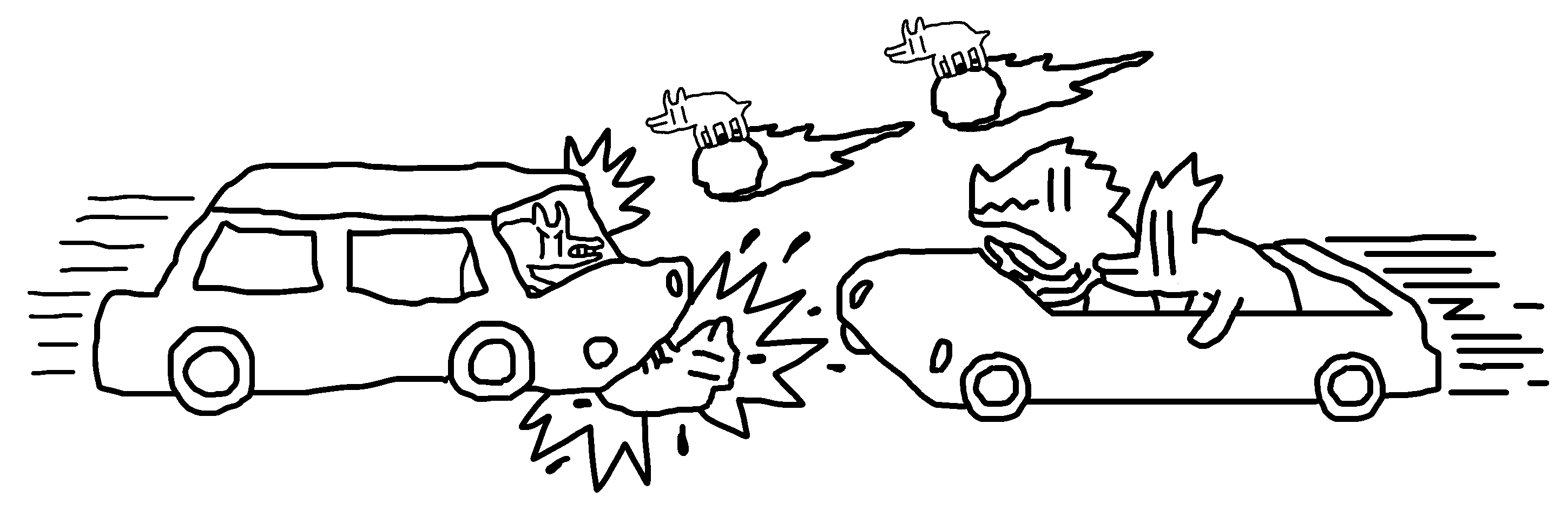
On Christmas, while listening to Ella Fitzgerald sing a medley that included "We Three Kings of Orient Are," I decided to re-read the stellar Grant Morrison/Frank Quitely action/science fiction graphic novella We3. Someone gave me the physical copy of this book (or maybe the individual floppy issues?) many years ago. I've been meaning to give it another look, and the Hoopla Digital streaming platform for library users has a copy of the complete work!
The premise is a clever idea about a dog-cat-rabbit trio who have been subjected to gruesome military-industrial experimentation, giving them human-level cognition, crude powers of speech and lethally badass weaponized body armor. Across three story installments they perform a test assassination, escape from captivity and struggle to look out for one another while battling enemies across hill and dale in search of a refuge to call home.
Morrison has developed fascinating and forward-thinking ideas about how the building blocks of the modern narrative comics medium can be rearranged to accomplish new modes of conveying information, and We3 is arguably the best instantiation of some of these ideas because it is the most functional and the least showy (at least of which I’m aware). Morrison and Quitely repeatedly manage to dazzle the eye without making the reader lose any interest in what happens next, like when they split a tier’s worth of panels into multi-dimensional cross-sections of time to show motion and action without compromising legibility. Or when they angle a cascade of larger panels in on themselves into an accordion-like folding sequence that threatens to collapse under its own weight while drawing the reader inexorably towards a violent pivot-point in the survival story. The storytelling in We3 is interesting, elegant, exciting and still feels fresh more than twenty years after it was published. It takes a draughtsman of visionary skill to bring material like this to life in a way that feels plausible, and Quitely is the person for the job with his realistically representational old-school comics style and a gently retro arabesque to his line. Great colors by Jamie Grant and offbeat lettering by the venerable Todd Klein complete this deluxe package of outstanding short-form visual storytelling. Most highly recommended, though people who love animals may have mixed reactions to the explicitly-depicted levels of cruelty and brutality in which the creatures in this story are involved. Our protagonists are fearsome warriors, though, and give more than as good as they get in this thriller.
After reading We3 on my laptop, I spent much of the rest of Christmas finishing Flashbacks: Twenty-Five Years of Doonesbury by G.B. Trudeau. I read about a hundred and twenty pages of Doonesbury comics in one day because I wanted to move past this book and get onto other business for my daily comics-reading diet. There’s a possibility this may turn out to be the last Doonesbury book I ever read.
Then I watched two Peanuts Christmas specials, A Charlie Brown Christmas from 1965 and It’s Christmastime Again, Charlie Brown from 1992, both directed by Bill Melendez. The latter was charming enough, and it was fun to see a more modern animation style in these programs, but the story was a little scattered and disjointed, especially in juxtaposition with the classic original special. Both good though.
It's been a while since I played Roulette, where I use a random number generator to pick three titles from the list of every book I've read from the beginning of 2011 to the present.
Any Empire by Nate Powell, read in 2012. I think I was reading Powell’s work at this time because I had lucked into an opportunity to meet him not long before. He’s a very talented graphic novelist with considerable skill as both a writer and artist. As I recall, Any Empire is a thought-provoking meditation on fantasies about war and violence and how they play out in and influence the mind of an adolescent boy. As a former lad myself, particularly one with an overactive imagination who used to pace around in my neighbors’ yard for hours making up action stories in my head and worrying my mother, I remember being struck by a sequence in Any Empire where the same scenario plays out for the war-obsessed young protagonist, to the consternation of his mom and dismissal of his father who tells her not to worry. I have some vague, possibly erroneous notion that Any Empire ends on a note that suggests perhaps we as a society should be quite a bit more worried about that kind of behavior than we are. I don’t want to look up a summary and see if I’m right; maybe I should re-read this book some time and see what I think of it. Either way, I know it’s exquisitely drawn, and I remember the story being engaging enough.
The Wee Little Woman by Byron Barton, read in 2015. I got on a Byron Barton kick around this time, reading Dinosaurs, Dinosaurs and My Bus a few entries before The Wee Little Woman. I remember those other two but don’t recall specifically what The Wee Little Woman is about. Some friends had a new baby in 2025 and we gave them a board book version of Dinosaurs, Dinosaurs for their baby to hopefully enjoy in a few years when she’s old enough for stuff like that.
The Castle in the Forest by Norman Mailer, read in 2011. I was really into Mailer at this point in my life, having read The Naked and the Dead, The Executioner’s Song, The Armies of the Night and Harlot’s Ghost not long before. The Castle in the Forest is his last published novel before he died, and it’s both a pretty good and deeply weird book. The premise is that it’s told from the point of view of a demon who works for Satan and who was present at the moment that Adolf Hitler was conceived and whose task it is to watch over Hitler in youth to make sure he grows evil enough to fulfill his life’s purpose. If I remember right, the most well-articulated concept and idée fixe of The Castle in the Forest is the notion that the cosmic conflict between God (whom the demons call the “Dummkopf”) and Satan is just another game of spycraft between competing espionage services. I enjoyed this book, and reading it once was definitely enough. Recommended for patient and Mailer-curious readers only.